



Card Author:
Location:
Date:
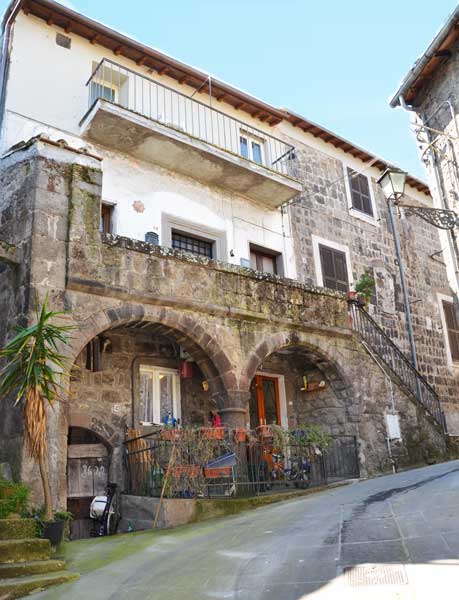
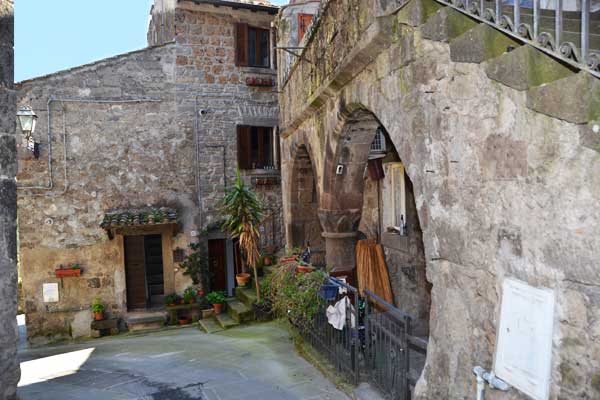
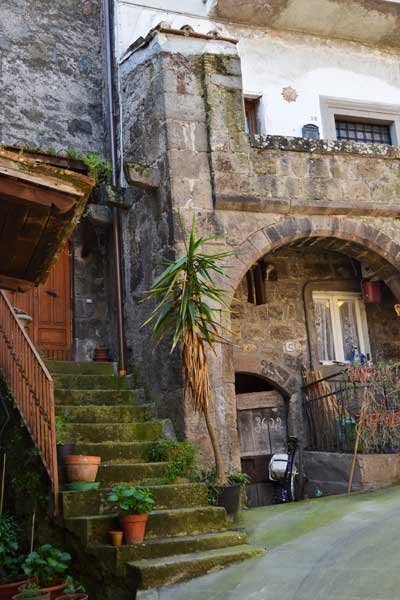
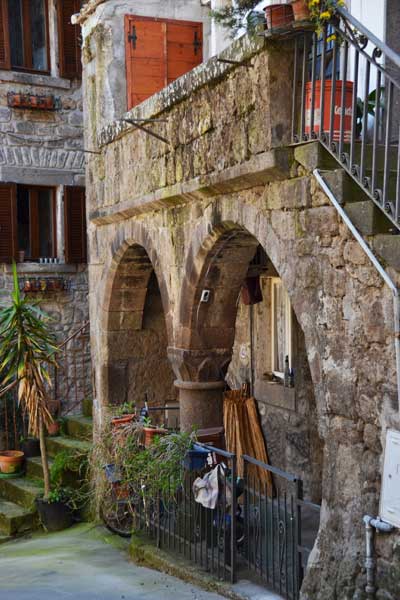
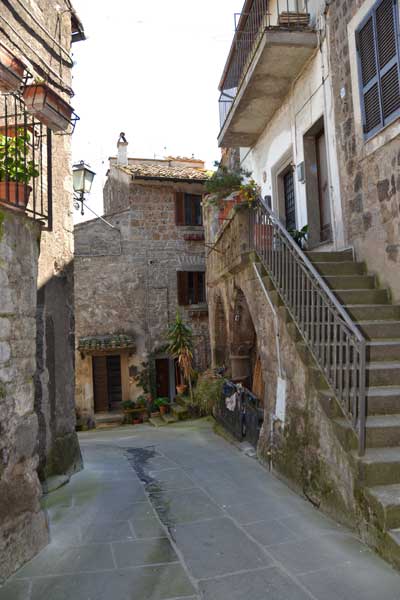
The thirteenth-century building, now used as a private residence, was born with all the distinctive features of the civil and noble architecture of the thirteenth century in the context of the local urban fabric as one of the most characteristic monuments of the village of Vitorchiano.
Info: Info point Vitorchiano – Pro loco Vitorchiano. Piazza Roma, s.n.c. Tel. 0761373739prolocovitorchiano@gmail.com – infopointvitorchiano@gmail.com

Municipality of Vitorchiano, Tourist Office – Piazza Sant’Agnese, 16 – cap. 01030 – tel. 0761373745. www.comune.vitorchiano.vt.it, e-mail info@comune.vitorchiano.vt.it
12TH CENTURY PALACE
HISTORICAL NOTES AND DESCRIPTION
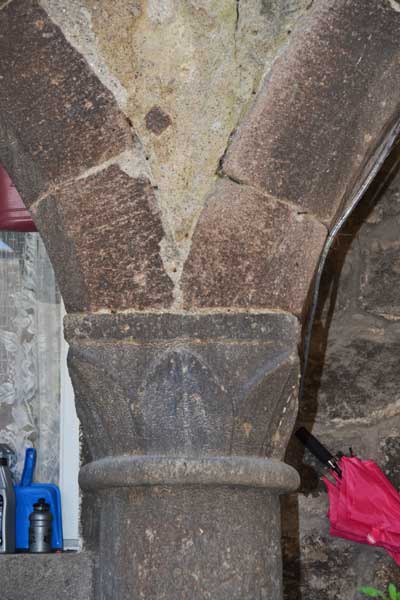
Virtually absent regarding the thirteenth-century palace of Vitorchiano are the historical sources in our possession. Taking a cue from the Vitorchianese chronicles of the sixteenth-century chronicler Curzio Gobbino who report its history, we have the indication of 1172 as the initial date of the city development of the low medieval period, the year in which Vitorchiano took part in the destruction of Ferento. During the war (1199) between Viterbo and Rome, Vitorchiano, disputed by the two towns, definitively placed itself under Roman protection, thus becoming the target of the Viterbo people, who damaged its walls on several occasions. Part of the oldest part of the town, the thirteenth-century building with the tower, known as the Rocca, located between the Palazzo Comunale and the monastery of Sant’Agnese, the same Palazzo Comunale and the monastery of Sant’Agnese and the church of Santa Maria , is an integral part of the fulcrum of the village which saw the reconstruction by the Romans during 1233. Between piazza Sant’agnese and via Santa Maria thus develops the oldest fulcrum of the city with buildings that play the main role of all aspects both religious and civil. Just along Via Santa Maria, after passing the church of the same name, you will find on the left the so-called thirteenth-century building, characterized by a porch with two very wide archways, under which there are doors of private houses, which are also found on the balcony with balustrade. , accessible via a side staircase. From an architectural stylistic point of view and with a careful comparison based on the Morellian method, the building can be framed chronologically in a period included in the first two quarters of the thirteenth century. The building is characterized by two arches of the portico which rest, in the center, on a peperino column with a capital decorated with large leaves. On the left side a small room has been created in the masonry, from which three peperino buttresses protrude. The supporting architectural elements emerging from the wall are visible on the balustrade. Above are visible the architectural elements supporting the balustrade that emerge from the wall.
ESSENTIAL BIBLIOGRAPHY
Vitorchiano, il passato presente, edition edited by Fiorenzo Mascagna, historical research by Elide Vagnozzi, Stampa Arti Grafiche Artigiane 2005.
D’Arcangeli V., Vitorchiano, in “Tuscia viterbese. I Comuni”, vol II, 1968, pp. 473-476.
Special thanks to Dr. Andrea Presutti for scientific advice and archival photographic material provided on Vitorchiano.
– Vitorchiano com’era Facebook page for collecting old photos of the beautiful village of Vitorchiano, in the province of Viterbo. Images of the country, its inhabitants and its traditions.


